
Most of us are just drifting.
Night Tapes
Ain’t this the dream you wanted all along?
The Manuscript
Those dates didn’t follow the manuscript at all. No arc. No sensible pacing. No agreed genre.
And Jesus — how I liked it.
I like to think I live an organised life. Plans, lists, structure. A convincing imitation of control.
In reality, it’s curated chaos. Everything looks intentional until you zoom in and realise most of it is instinct wearing a blazer and calling itself a system.
I say yes more often than no.
Not because I can’t say no — I’m excellent at it. Surgical, even.
I say yes because I trust my gut and my no is not based on fear.
That’s how I ended up saying yes to the late-night call — the famous one.
The call that arrives after dignity has gone to bed but curiosity is still wide awake.
“Booty call” is such an ugly phrase. It makes it sound like poor judgement instead of excellent timing.
Did I overthink it? Obviously.
Did I say yes anyway? Also obviously.
Because chaos, when it’s honest, has a pulse.
It isn’t noise.
It isn’t recklessness.
It’s information.
That night, it tickled my inner chaos because The Sandman sent an assistant and he was not helpful.
At some point, half-awake and badly supervised, I heard him whisper that I was a nice person — an observation, not a promise.
It didn’t offend me.
If anything, the rudeness of the timing made my decisions even more unpredictable.
Compliments like that aren’t meant to reassure — they’re meant to destabilise. Which they did.
I didn’t mistake it for love.
I didn’t promote it to meaning.
I just let it be what it was.
And that, finally, felt like wisdom.
Bird Guy and the Strategy of Hope
None of my dates have real names. Not because I’m cruel — because I’m organised.
There was Mouse Man.
Spell Guy.
Spare Guy.
Captain.
Cat-Man.
And other characters.
Let’s not forget The Email Guy — who earned his title with admirable efficiency.
This one became Bird Guy.
No dramatic reason.
He just flew a bit longer.
My colleagues have been witnessing my dating life for years now. They follow it the same way I do: with laughter, commentary, and a shared strategy best described as hope, but supervised.
They’ve seen volume.
They’ve seen turnover.
In almost four years of dating, only two men made it past a second meeting. Most barely made it past coffee.
Bird Guy stayed airborne longer than most. That alone was notable.
They noticed before I did. That’s how it always goes.
“Oh no,” one of them said.
“You like him.”
I denied it immediately. I’m excellent at denial.
I’ve denied my need for a man’s touch for years — so pretending I didn’t like someone was hardly a stretch. Denial, after all, is a skill. You don’t lose it just because you’re healing.
So they introduced structure.
Bird Guy, they decided, would need to collect 20 ClassDojo points before earning a dream day with me.
ClassDojo, for the uninitiated, is an app used in schools to reward children for positive behaviour — listening, kindness, effort, and not setting the classroom on fire.
A deeply reasonable system.
Bird Guy did not reach 20 points.
The eagle landed early.
I cheated the point system.
Casually.
Without regret.
Because sometimes the strategy of hope isn’t about rules. It’s about noticing when something lasts longer than usual — and allowing yourself to enjoy it without pretending it’s permanent.
Hope, in my experience, is a terrible accountant, but a decent travel companion.
KITT, Body Hair, and Honesty
Yes — I noticed the body hair.
Not curated.
Not apologetic.
The full Michael Knight situation.
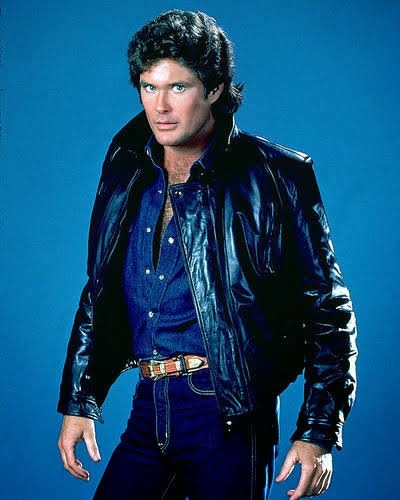
Which felt oddly appropriate, considering I’d already confessed — on a dating app, no less — that my brain operates like KITT’s engine: constant commentary, heroic intentions, and a tendency to accelerate emotionally without checking the road conditions.
So when that familiar tremor started — the one that feels like faulty wiring just behind the ribs — I wasn’t surprised.
I didn’t even like him at first. Not instinctively. Not romantically.
Then he repeated something a friend had once said to him. Out loud. Casually. As advice.
“Ronkelit runkkaa.”
An insult.
A joke.
A personality test delivered without packaging.
I laughed immediately — not because it was elegant, but because it was unmistakably him.
He was a man without a leash.
And yes — I’ve known men with leashes.
Men who control themselves like Spartans.
Disciplined. Contained. Impressive in the way statues are impressive: powerful, immobile, and slightly cold to the touch.
This wasn’t that.
Still, he wasn’t a bad boy.
Not at all.
There was no posturing.
No performative danger.
No chaos dressed up as confidence.
What there was instead was honesty — almost brutally so.
The kind where you don’t need to switch on your emotional scanner or cross-reference behaviour with intention.
He didn’t know what he wanted, and he wasn’t pretending otherwise.
That kind of transparency is rare and disarming.
No curated vulnerability.
No emotional TED Talk.
No “let’s unpack this together”.
Just a man saying exactly where he was — lost, but not lying about it.
I liked that.
Still, liking someone doesn’t mean handing them the keys.
Chemistry, I’ve learned, is just information.
Useful, exciting information — but not a plan.
Engines can be impressive.
Direction is what gets you anywhere.
The Christmas Tree Incident
There he was — heavily tipsy — standing in my living room, staring at my Christmas tree like it was a religious vision or an incoming aircraft.
I’d bought it two drinks earlier.
It was too tall.
Aggressively tall.
The kind of tree you buy when you briefly imagine yourself living in a penthouse. A tree with ambition. A tree that believed in ceilings I do not own.
He laughed at my drunk Christmas purchase.
I laughed at his tipsy presence.
That’s how it went — mutual observation, equal amusement, no one pretending to be more together than they were.
It was perfect.
Two adults, mildly intoxicated, standing next to a space-shuttle-sized spruce, fully aware this was not how responsible decisions are made — and enjoying it immensely.
There’s something deeply intimate about laughing at the same mistake while it’s still standing in the room.
In the morning, in the soft light of the beginning of a weekend, I asked him casually — as if this were a normal survey question:
“When was the last time you made a booty call and woke up on a mattress on the floor, surrounded by a Christmas tree that looks like it’s about to launch?”
He blinked.
Paused.
I could see it land.
For him, the question opened a door to the past — a version of himself who lived closer to impulse, when chaos was recreational and consequences felt optional.
For me, it was simply the start of a weekend. Another ordinary twist in my life. Which, I’m realising, says more about me than him.
Forty-Eight Hours and the Word “Nice”
There’s something you learn after forty-eight hours.
Not the rushed kind.
Not the performative kind.
Forty-eight hours of tenderness, laughter, closeness, and conversations that don’t dodge.
The kind where no one is auditioning and no one is pretending to be cooler than they are.
After that, you can’t be put back into a message that says:
“Thank you for the weekend, it was nice.”
Nice?
That was the moment I knew.
Not because I was offended — I wasn’t.
But because the word landed with a quiet finality that didn’t match the experience.
Nice is what you say about a soup.
Or a view.
Or a neighbour’s dog.
Nice is not what you say when something has weight.
And he didn’t pause.
That told me two things at once — and both were true.
He didn’t like me enough to stop floating. And he didn’t yet know how to land.
He told me he didn’t know what to do, even though I tried guide him a few dates earlier. I told him to do what he likes.
To move.
To enjoy.
To trust that movement eventually teaches direction.
Because after he chased carefully built plans that collapsed, it’s not easy to reroute the mothership of fucked-up expectations.
You don’t just turn that thing around.
You drift for a while.
You recalibrate.
I recognised that immediately.
I know that place.
I lived there myself — years of motion without arrival, years where staying anywhere felt heavier than leaving.
So I didn’t judge him.
I understood him.
But understanding doesn’t require waiting.
And clarity doesn’t need drama.
Sometimes it’s just a word — small, polite, and accurate enough to tell you everything you need to know.
Flow, Empires, and Difference
“Let’s go with the flow,” he said.
It sounded reasonable. Modern. Emotionally literate.
The kind of sentence people use when they don’t want a map but still expect the road to be kind.
The problem with flow is that it assumes movement without direction is neutral.
It isn’t.
It always goes somewhere — just rarely where you would choose on purpose.
He wasn’t what I normally choose.
And that was part of the appeal.
I like people who can be alone without panicking. Quiet men. Grounded ones.
The kind who can sit in silence and notice small things — light on a wall, coffee cooling, the pleasure of not rushing.
Lonely wolves, not restless ones.
He was kind-hearted. That much was obvious. Tender in an unpolished way. Honest. All over the place — but not pretending otherwise.
What became clearer with time was the movement underneath it all.
Flow instead of footing.
He talked about difference — how we were “very different”.
He never explained how.
Difference, in his mouth, felt less like a diagnosis and more like a placeholder.
A way of shelving uncertainty so it didn’t have to be handled.
He said he wanted to make a rational choice this time, as if love were an empire that collapsed due to poor planning.
People like to talk about the Roman Empire that way too — as if it were just a vibe.
Marble. Wine. Roads.
“The life was pretty chill.”
They forget the infrastructure.
The labour.
The years of boring, repetitive decisions that actually held it together.
Relationships are the same.
You can’t build one on atmosphere alone. Someone has to lay the roads.
I understood him more than I wanted to.
Flow is perfect when you’re recovering.
It keeps you moving.
It keeps you from landing.
But at some point, you realise this motherfucking ship doesn’t need vibes. It needs a course.
Staying, Leaving, and the Myth of Control
Here’s the part I didn’t expect.
He didn’t teach me how to stay.
He showed me that I can leave.
For a long time, my fear wasn’t men — it was what would happen to me if I let them close.
Touch felt like a loss of control.
Desire felt like a slippery slope back into old, familiar unhappiness.
So I managed it.
I analysed.
I intellectualised.
I wrote.
Being Boring.
Making Sense of the Hurt.
All of it was sharp.
All of it was careful.
All of it kept me safe.
And quietly miserable.
What this encounter gave me wasn’t danger. It was proof.
Proof that I can feel attraction without disappearing into it.
That I can enjoy closeness without handing over authorship of my life.
That I can say yes without fear — and no without guilt.
I stayed because I wanted to.
I left because it was time.
Nothing dramatic happened.
Nothing collapsed.
No part of me broke open or shut down.
That’s when it landed.
Control isn’t about avoidance.
It’s not about keeping everything at arm’s length and calling it wisdom.
Control is knowing you’ll still be yourself on the other side of contact.
Not frozen.
Not scattered.
Still intact.
That’s new for me.
And once you know that, you don’t need to grip quite so hard anymore.
Flow (With Direction)
So yes — I’ll go with the flow.
Just not the kind that drifts.
I’ll flow with curiosity, appetite, and laughter that surprises me in the middle of the night.
I’ll flow towards men who make my body wake up and my mind stay seated.
I’ll let desire move through me without mistaking it for destiny — or danger.
But I won’t float.
Floating is what you do when you don’t want to choose.
When movement feels safer than stillness.
When direction might ask for something you’re not ready to give.
I have edges now.
I know when I’m in.
I know when I’m out.
Turns out, control isn’t about gripping the steering wheel — it’s knowing you can change lanes without panic.
Flow, as it happens, works much better when you know where you’re going.
Some people drift because stillness scares them.
Others move because they’ve learned how to stand still without losing themselves.
I’m not finished.
I’m not fixed.
But I’m done floating.
 Let me tell you a story
Leave a comment